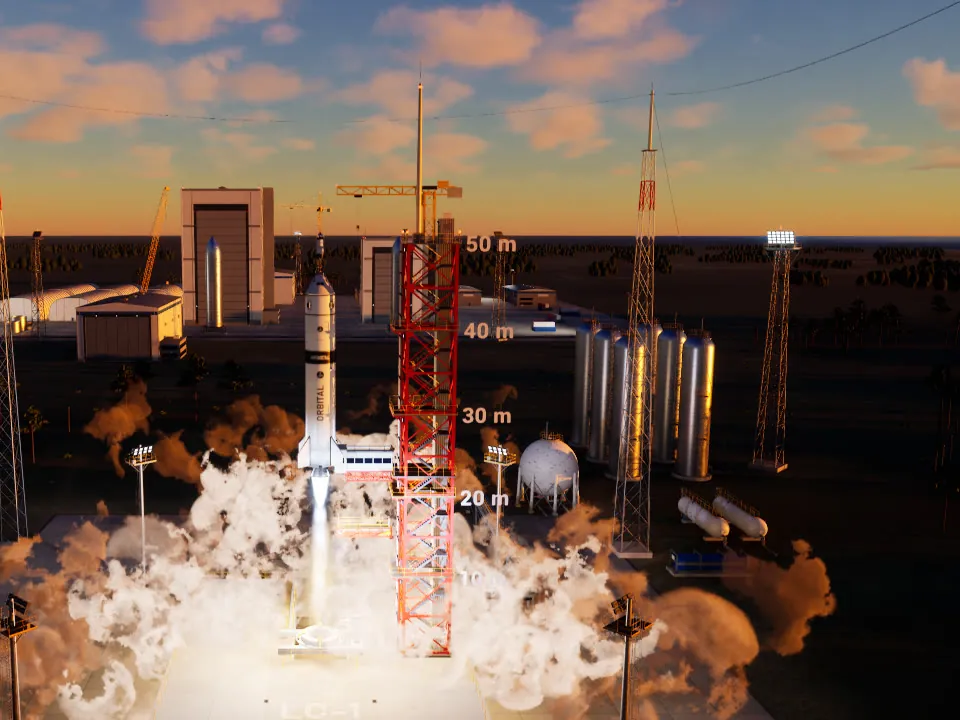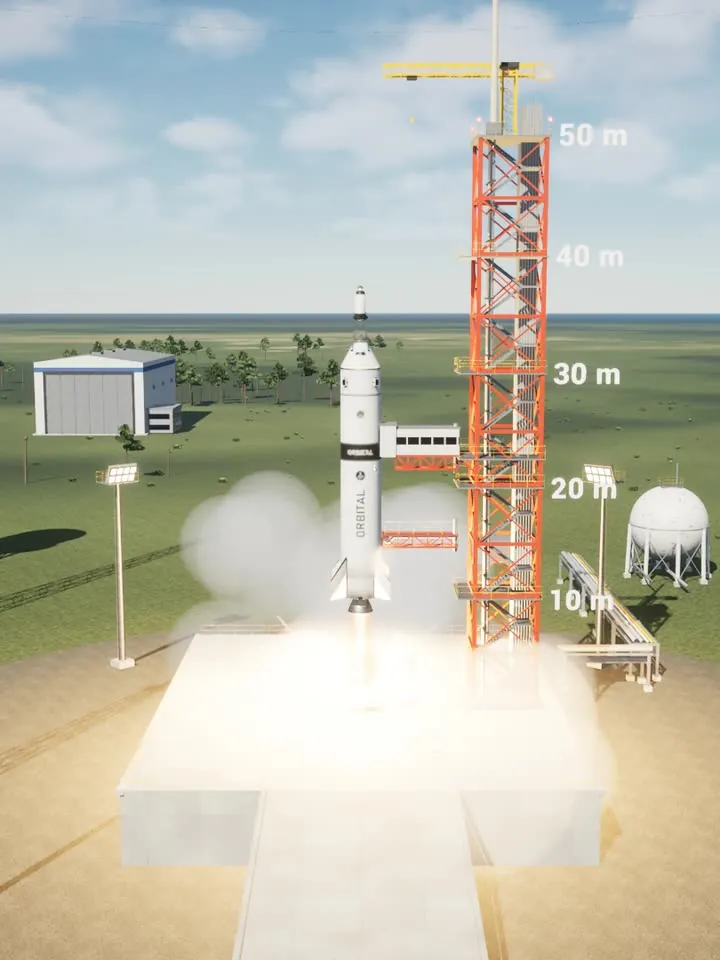
T+1.44 s
Liftoff
500 kN of thrust against about 30 tonnes of rocket. With a thrust-to-weight ratio near 1.7, Pathfinder clears the tower slowly, the way a fully fuelled rocket does.
- Altitude
- 7.2m
- Velocity
- 10.0m/s
Run the launch company.Win the contracts. Reach space.
A rocket launch company game on a real flight simulation. Take a contract, fly it yourself, and let the physics decide whether you get paid.
Flight profile · T+0 to T+139 s
One real flight from the game, start to finish: Pathfinder flying a Suborbital science contract. Every picture and number below comes from that same run.
T+1.44 s
500 kN of thrust against about 30 tonnes of rocket. With a thrust-to-weight ratio near 1.7, Pathfinder clears the tower slowly, the way a fully fuelled rocket does.
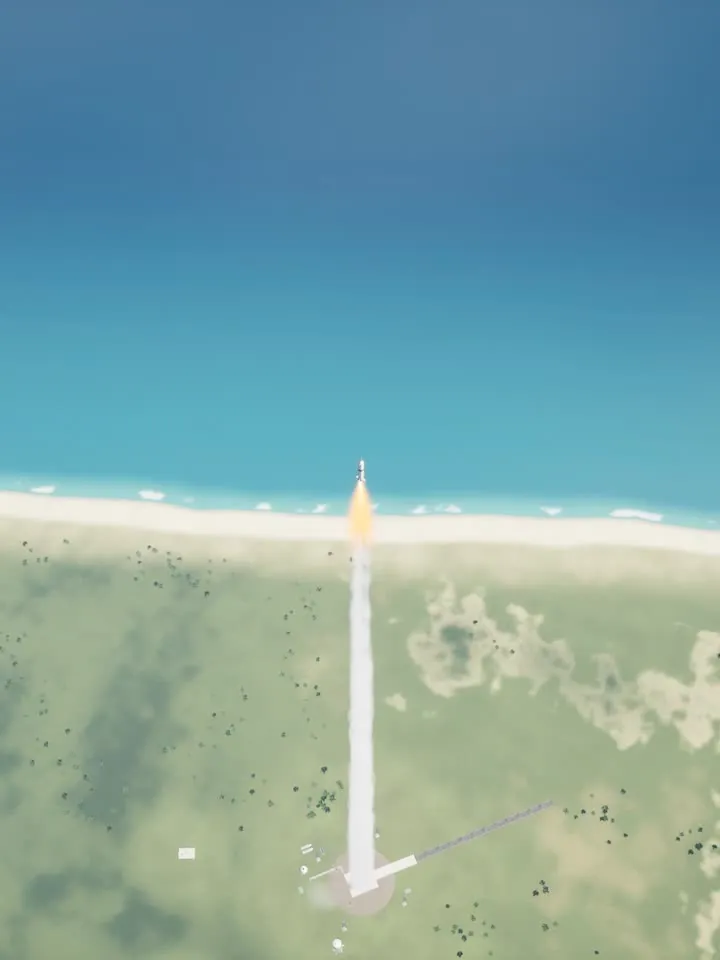
T+18.90 s
The simulation moves in fixed steps and applies thrust, gravity and drag at every one. The Earth's rotation is in there too: the HUD tracks how far it carries the rocket off the pad.
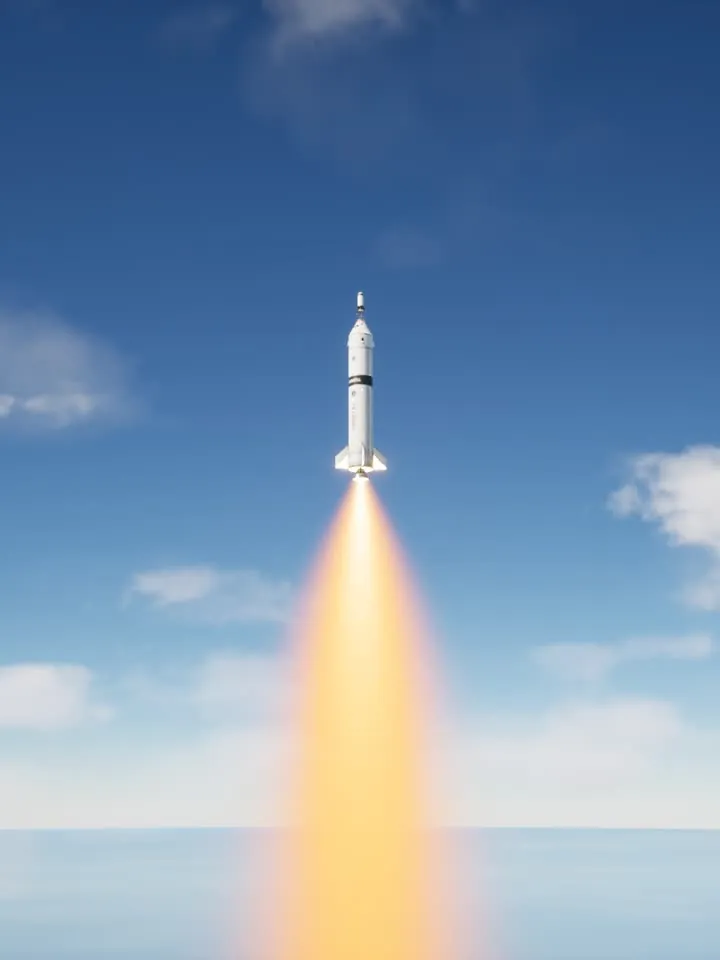
T+45.13 s
The engine burns 150 kg of propellant a second. The rocket gets lighter as the tanks drain, so the same thrust pushes it harder and the acceleration keeps climbing.
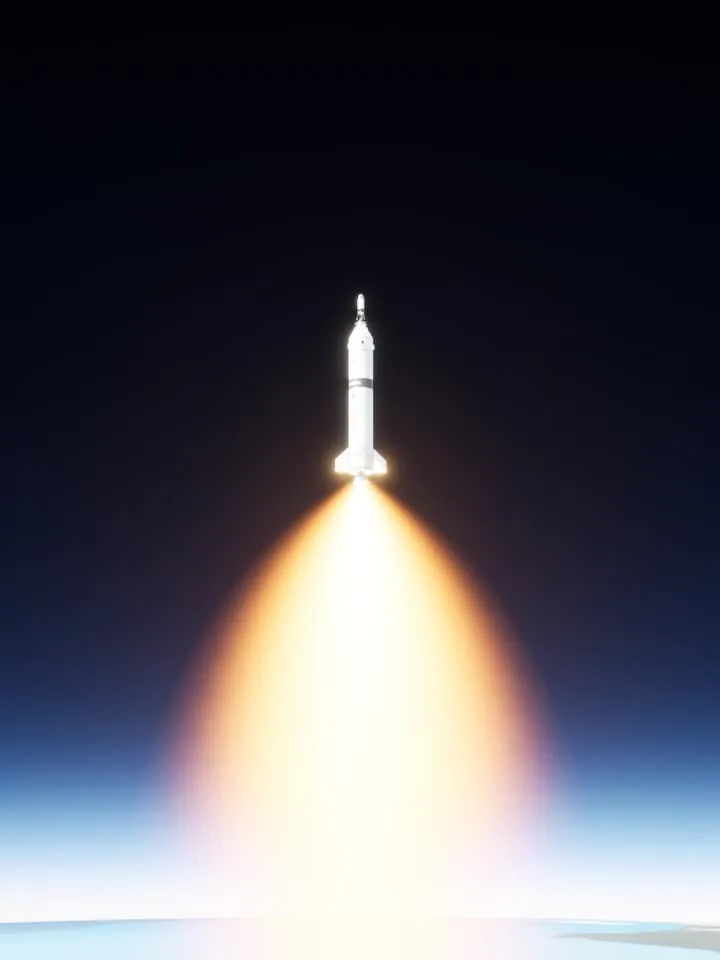
T+101.50 s
Above 40 km the air is almost gone. Drag falls toward zero while the engine still gives its full 500 kN.
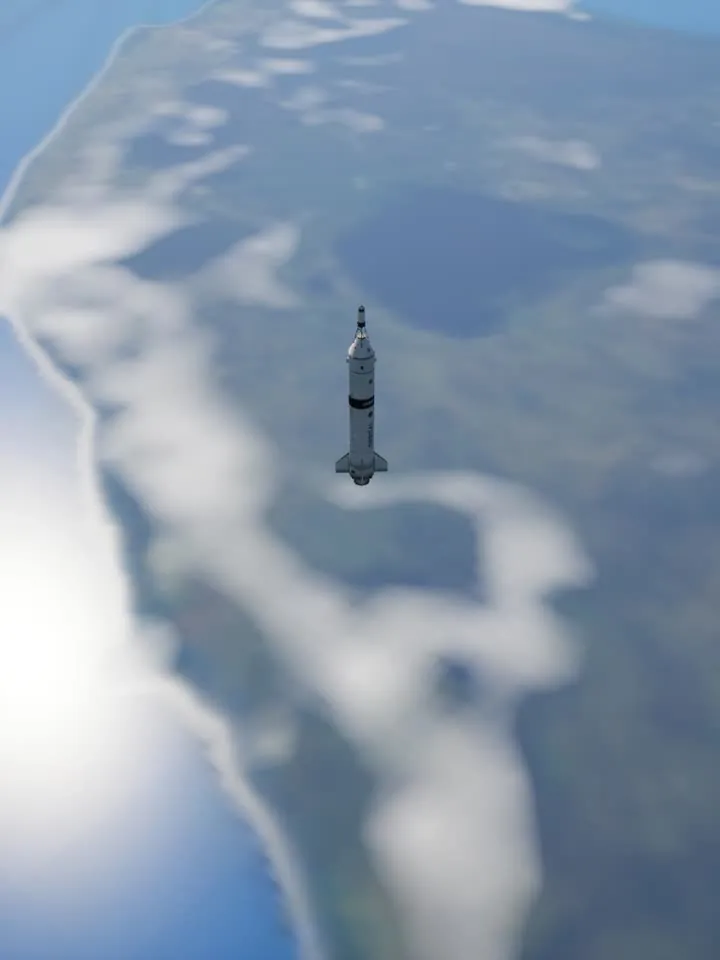
T+133.56 s⚠ Engine cutoff
The tanks run dry 10 km short of the contract. Nothing is left to burn, only 2 km/s of upward speed to spend against gravity.
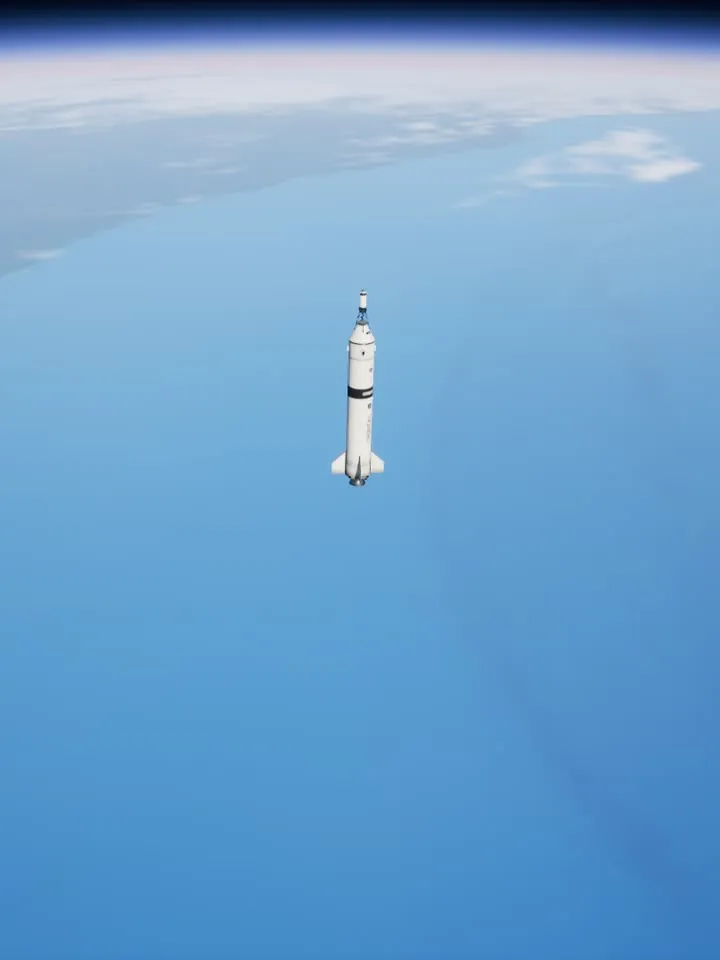
T+138.95 s✓ Mission success
Pathfinder crosses 100 km still climbing at nearly 2 km/s. The contract settles on the spot.
+120,000credits · Suborbital science
Contract board · 4 offers, new board every 5 minutes
Pick an offer, accept it and launch. Meet the objective and the reward is yours. Lose the vehicle first, by abort, break-up or crash, and you pay the penalty instead.
Carry a university experiment past the edge of space.
Fly an instrumented test article, climbing faster than the customer's target speed.
Give a laboratory module minutes of weightlessness above 120 km.
Base figures from the game's catalog. Each offer on the board varies by up to 15–20%.
Fleet · 3 rockets, 4 upgrades
The company opens with 250,000 credits and one rocket that is already paid for. Bigger contracts need bigger rockets, and those cost millions.
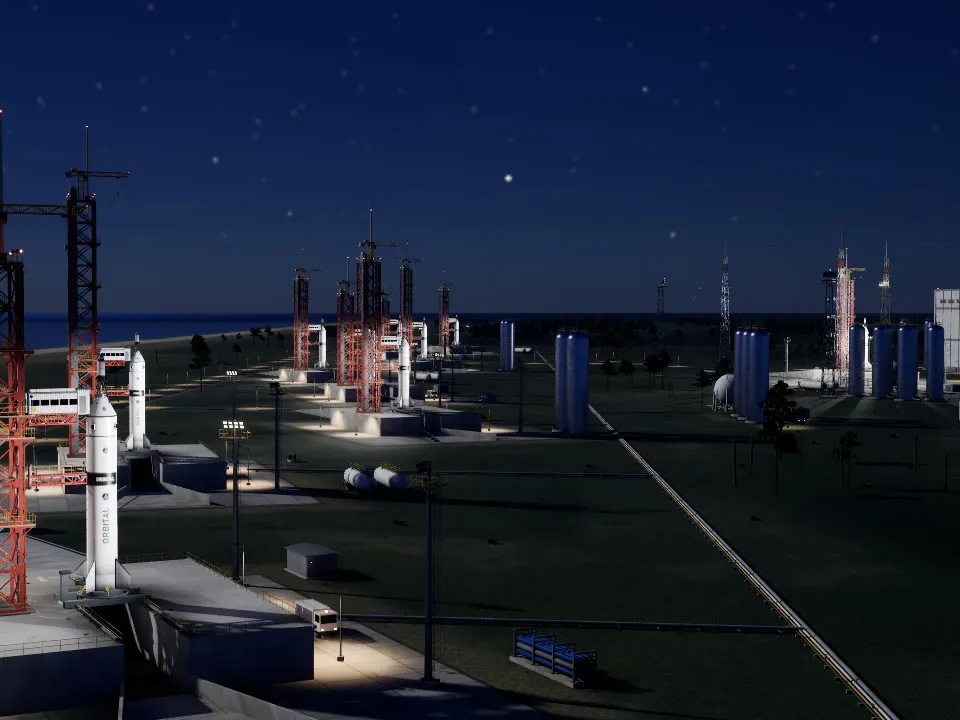
The company's first rocket: a single-engine sounding vehicle for light payloads.
A bigger, more powerful vehicle for heavier science payloads and longer flights.
The flagship heavy lifter: the largest payloads, the highest flights, the best record.
| Upgrade | Effect | Requires | Price |
|---|---|---|---|
| Pathfinder payload stretch | A longer payload bay: +800 kg capacity on Pathfinder. | None | 300,000 |
| Meridian payload stretch | +2,000 kg capacity on Meridian. | None | 900,000 |
| Redundant avionics | Dual flight computers on every rocket: +2% reliability. | None | 400,000 |
| Lean launch operations | Reusable ground equipment and smaller crews: 15% off every launch. | Redundant avionics | 500,000 |
The base · LC-1 to LC-10
Buy pads along the coast, station a rocket at each one and schedule contracts to fly without you. Automated launches run the same flight model as yours, plus a reliability roll for the rocket.
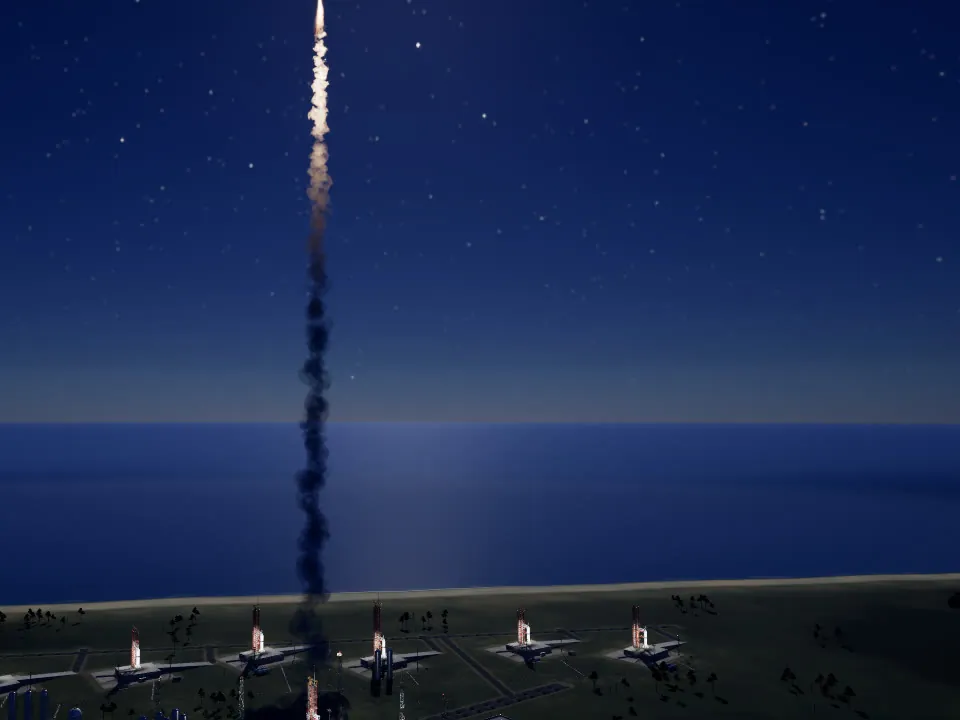
Conditions · 6 times of day, 4 kinds of weather
Choose the time of day, the weather and the graphics quality from the pad. The change applies at once, and the game keeps it for next time.
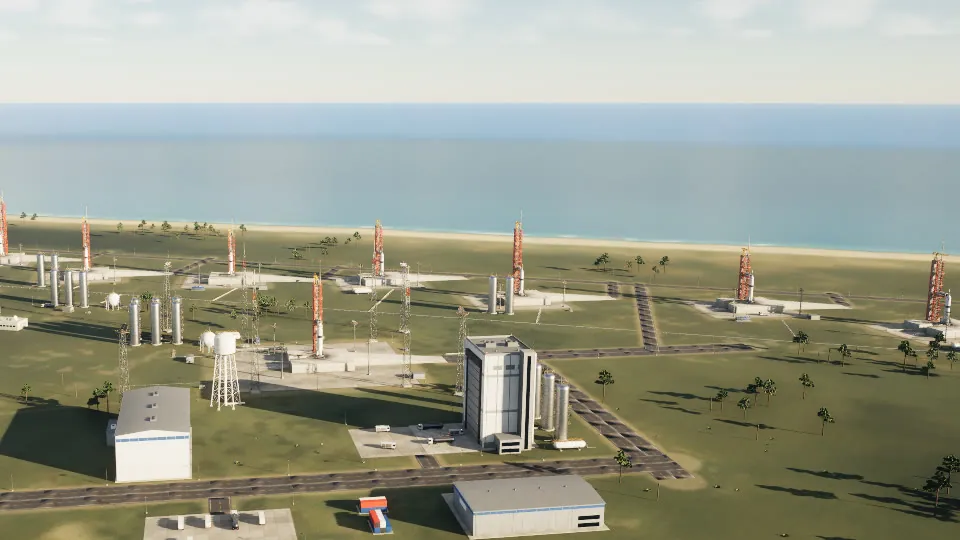
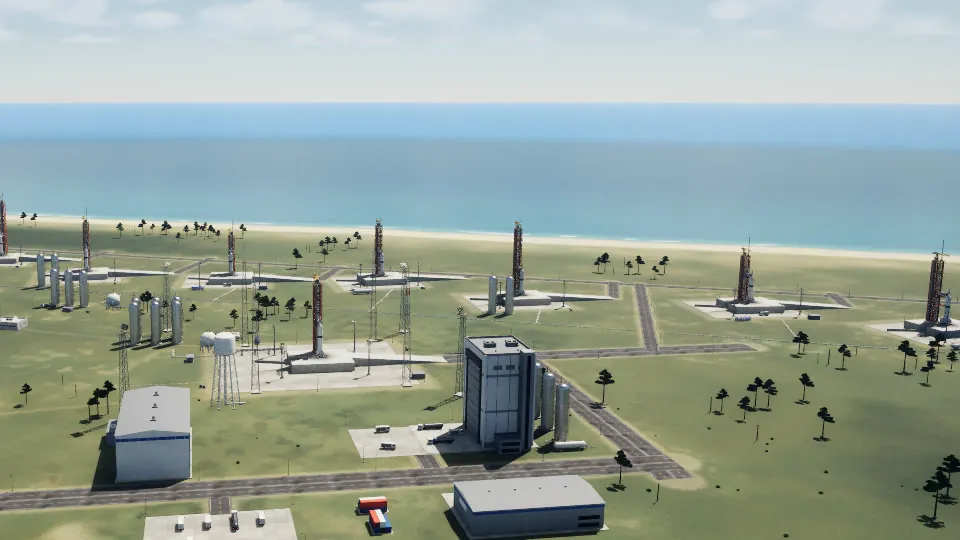
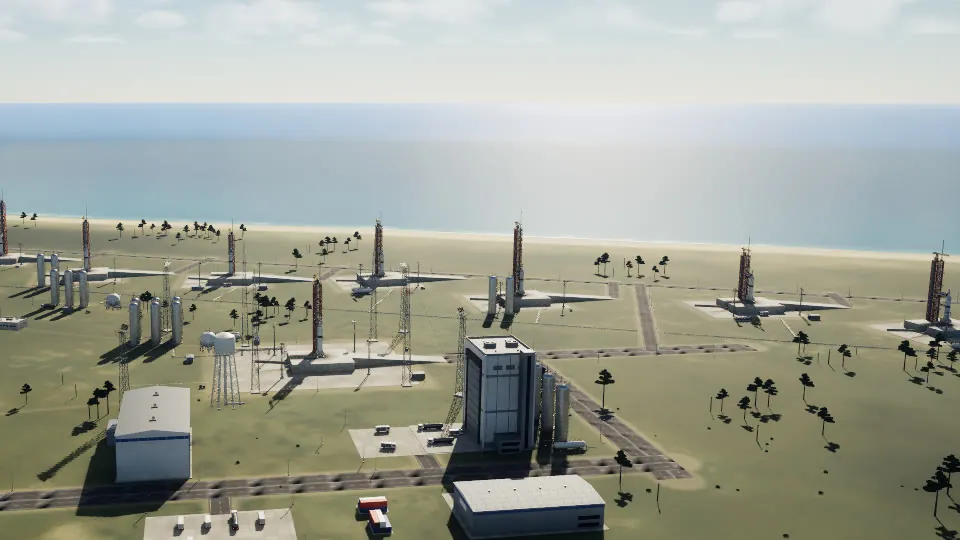
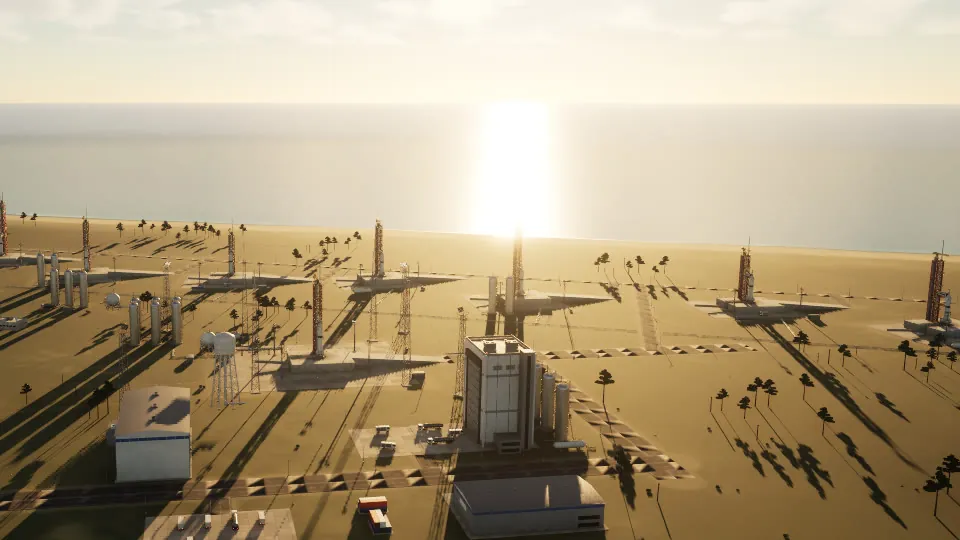
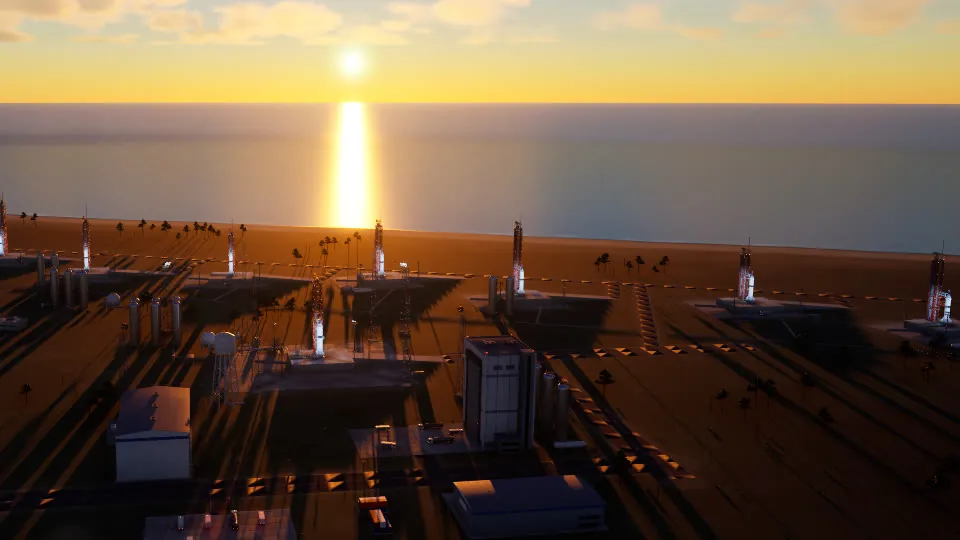
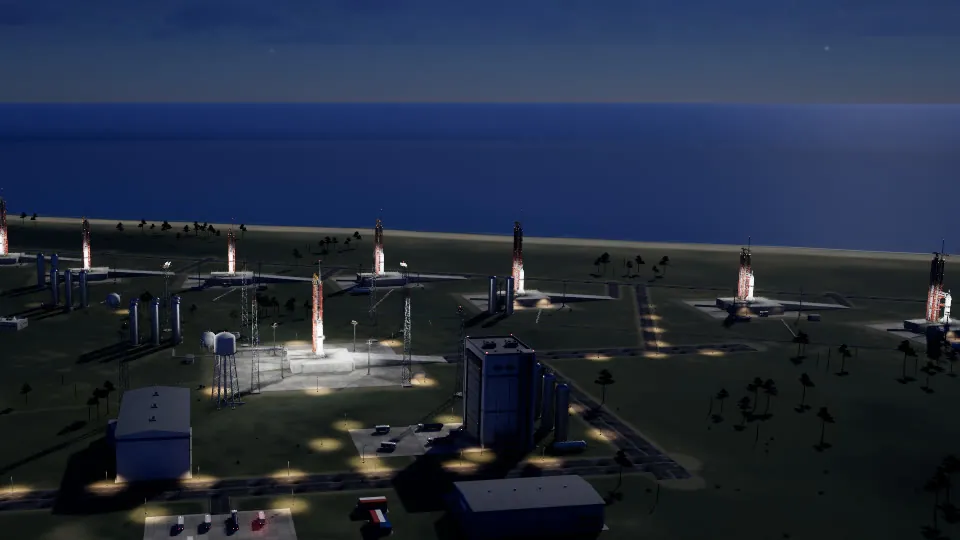 Golden hour · Clear
Flight model
Every launch runs on the game's own flight simulation. It is a game, not an aerospace tool, but the numbers behave the way rockets do.
Time warp runs from 0.05× to 20×. The simulation takes the same fixed steps, only more of them per frame, so the trajectory never changes.
Drag fades as the rocket climbs. On the flight above it fell from 11.6 kN at 48.6 km to 1.1 kN at 74.8 km.
29.5 m tall and 3.57 m across: engine and turbopump, finned first stage, interstage, second stage, service module, crew capsule and launch abort tower.
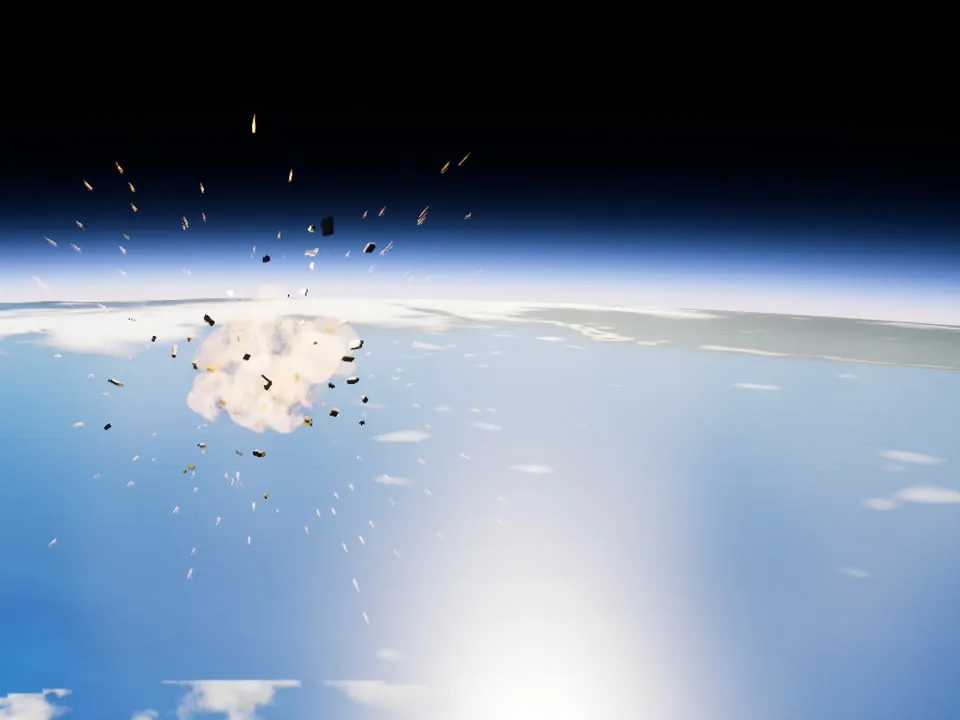
Press X and the engine stops. Low and slow, the rocket falls back and explodes on the pad. At speed it turns over and dives, or breaks up in the air.